Beauty Tech
Is XERF The Closest Thing To An Instant Facelift?
I tried the buzzy treatment from Korea known for its lifting, tightening effects.
The hard truth about skin care is that it requires patience and diligence to see results — especially if you’re like me and can barely contain yourself when waiting for water to boil. Getting an intense laser? Gotta wait for that post-treatment shedding before smoother, brighter skin reveals itself. Botox? The neuromodulator takes several days to a week to freeze wrinkle-causing muscle contractions.
XERF, thankfully, caters to those who love instant gratification.
If you haven’t heard of the buzzy treatment yet, know that XERF is the latest in-office procedure to land stateside from — you guessed it — Korea. Already a favorite among celebrities like Kim Kardashian, it’s quickly gaining traction for its skin-tightening, antiaging effects, all without going under the knife.
As a self-professed beauty treatment guinea pig (it is my job, after all), I had to try it. Here’s everything to know — and whether it’s actually worth the hype.
What Exactly Is XERF?

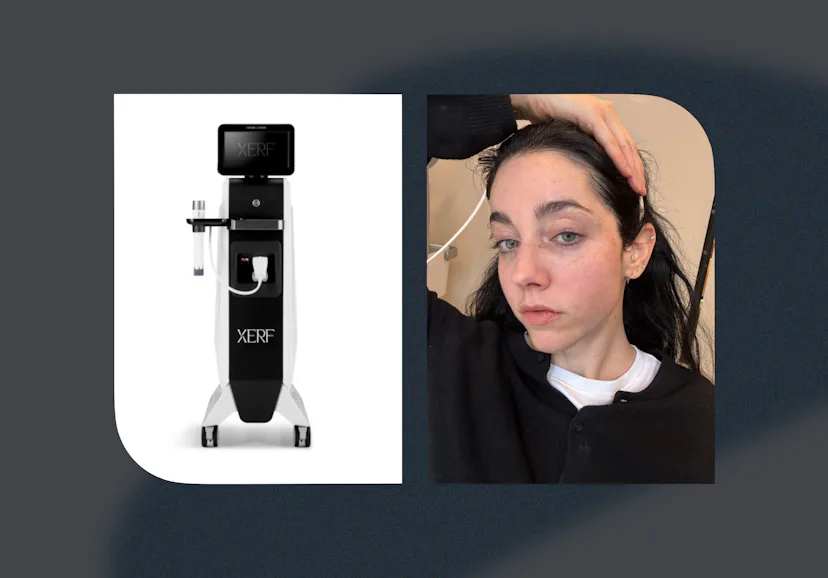
Cynosure Lutronic’s XERF is a radio-frequency-based lifting treatment, meaning it uses heat to penetrate deep beneath the skin’s surface to stimulate collagen production. It was just FDA-approved in the U.S. in August 2025, and it’s been around in Korea since it launched in 2024.
Dr. David Kim, M.D., a board-certified dermatologist and founder of Soho Derm in New York City, likens it to Thermage. “Thermage is also a radio-frequency-based treatment, but it uses only one frequency, while XERF uses two,” he explains (using 6.78 MHz and 2 MHz frequencies). “Thermage helps with superficial tightening, and it’ll stimulate collagen production, but you don’t get the deep lift you get with this one.”
In other words, it’s a noninvasive way to tighten and lift the skin.
The Benefits
According to Dr. William Harris, M.D., a double-board-certified plastic surgeon based in Beverly Hills, XERF is among the most advanced radio-frequency treatments currently available. It’s the first to deliver dual frequencies for both superficial and deep tightening — all while being light enough to not require numbing. “Historically, other radio-frequency treatments [like Thermage] have been quite sensitive for patients,” says Harris, whose patients rate XERF at a zero to three out of 10 on the pain scale.
Perhaps the biggest draw: There’s virtually no downtime. Expect a bit of redness for about an hour post-treatment, but that’s about it. Plus, the instant gratification of it all — results are visible almost immediately, with your skin looking subtly more lifted and sculpted right after your appointment. You’ll also get the added perk of seeing full results three to six months later due to collagen remodeling and production.
My treated cheekbone was undeniably higher, like that side of my face had somehow dodged gravity.
“It’s obviously not a facelift, but it’s a pretty easy, relatively pain-free treatment that you can do in the office that takes 45 minutes,” says Kim. “It’s also ideal for those who don’t want to do any injectables and just want to stimulate collagen with minimal downtime.”
Also notable? You can technically get away with just one treatment. “In Korea, it’s recommended to do two treatments one month apart, but I think you can spread it out to three months so you can experience the benefits for longer,” says Kim, adding that he suggests first getting the treatment twice a year and then once a year after that for maintenance. According to Harris, results last between 12 and 18 months.
Another major plus: Because radio-frequency energy doesn’t target pigment, XERF is generally considered safe for all skin tones when performed by a trained provider. That said, it’s not for everyone — those who are pregnant or have certain implanted medical devices (like pacemakers) should avoid it. For others, expectations matter. “Patients who have tried several energy-based devices with less-than-optimal results or who have goals that exceed the capability of the device should consider other alternatives, such as surgery,” adds Harris.
The Cost
On average, XERF will cost anywhere between $1,250 and $3,000 per session to treat the face and neck. The pricing will vary depending on your location and the provider you go to. Note that you can choose a targeted treatment that focuses on, say, your jawline, for significantly less — around $500 to $800 per session.
My Experience


Given that I’m only used to seeing instant results from facials, I went into my XERF appointment at Kim’s feeling both excited and a little skeptical. I was also nervous, since no numbing was involved. “There will be a little bit of pain,” he told me as I got comfortable in the chair. “Sometimes, if you want to do good treatments, you have to be prepared.”
After applying a conductor gel, Kim began slowly gliding the device across my skin, starting on my right jawline and cheek area. At first, it felt kind of like a stronger hot stone massage — nothing too bad. But it definitely got more intense in certain areas, mainly where there’s more bone or sensitivity. It felt like a deep, burning heat that nearly made my eyes water — but stopped just short of being unbearable. FWIW, I have a pretty low pain tolerance (despite having given birth).
Halfway through the treatment, Kim had me hold up a mirror so I could compare my XERF’d half with the other half of my face, and that’s when it really wowed me. “You can see the line from the chin to the jawline is smoother. And then, when you look at the cheekbones, the apex is like here, and [on this side] it’s down here. So it’s a little bit perkier. The same thing with the eyebrows, too.” He was right: My treated cheekbone was undeniably higher, like that side of my face had somehow dodged gravity.
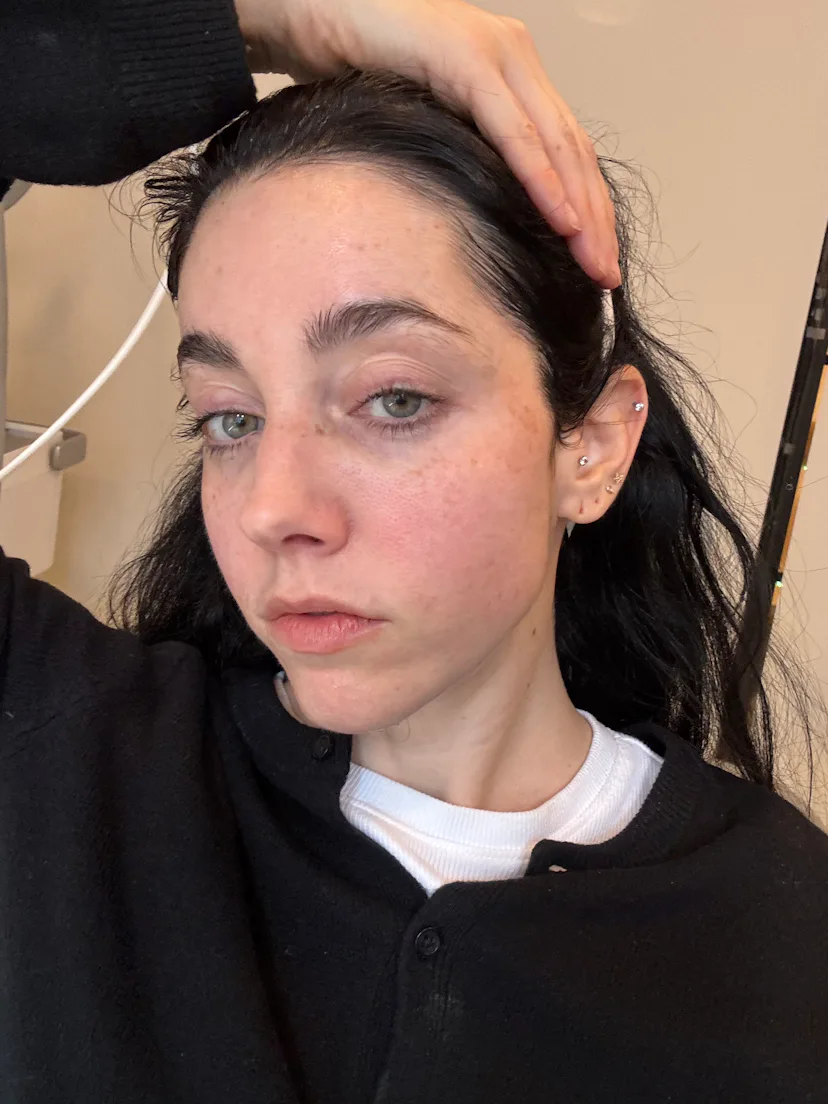
Once the treatment was finished, my face wasn’t even red — it just looked like I had come in from the cold with a slight flush. My skin felt a little hot, but it cooled within five minutes. I could’ve easily gone back to the office without anyone guessing I had just experienced an in-office cosmetic procedure.
The Verdict
At this point, it’s been about three months since I got the treatment. I also got Xeomin (a neuromodulator) around the same time, so I can’t say whether my smoother, firmer complexion is solely due to XERF.
Because it stimulates collagen at such a deep level, you’ll experience a second wave of that sculpted effect once it regenerates at the three-month mark. I think this happened to me. At the very least, I’ve been low-key into my skin’s glow lately — and my cheekbones and jawline do look pretty snatched.

Really, XERF stands out in the antiaging realm for a couple of reasons — one being its ability to hit such deep layers beneath the skin without as much pain or downtime as other radio-frequency treatments. It’s also noteworthy for delivering instant results. And it’s important to point out that it’s knife- and needle-free — perhaps a rarity in today’s facelift era.
As Harris points out, this is a great option for those who don’t want or aren’t ready for more invasive procedures. “Patients who are not ready for surgery, want to avoid it, or are looking to maintain a previous face and neck lift are the best candidates for this device.”
Think of it as strengthening the scaffolding of your face — keeping everything firm and lifted, rather than layering on volume with injectables. “You don’t want to just rely on fillers and things like that to restore the volume, because that’s when you can start to look puffy,” says Kim. “This is something that can really make a big difference — you want your skin cells to stay young and stimulated.”
I will say: XERF has been the most impressive tightening procedure I’ve ever tried. Considering the results last at least a year, it’s something I’d genuinely return to in my ongoing battle against gravity.
