Curtain Call
Kelli O’Hara Is Having The Time Of Her Life
In Fallen Angels, the Broadway legend and Rose Byrne turn a girls’ night into glorious chaos.
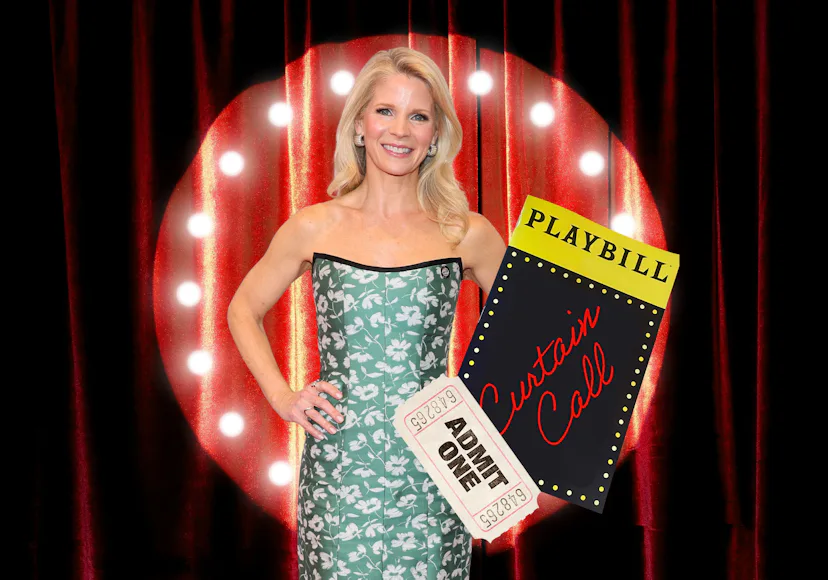
The most raucous comedy on Broadway right now isn’t an edgy new musical that started downtown — but rather a 100-year-old Noël Coward deep-cut play.
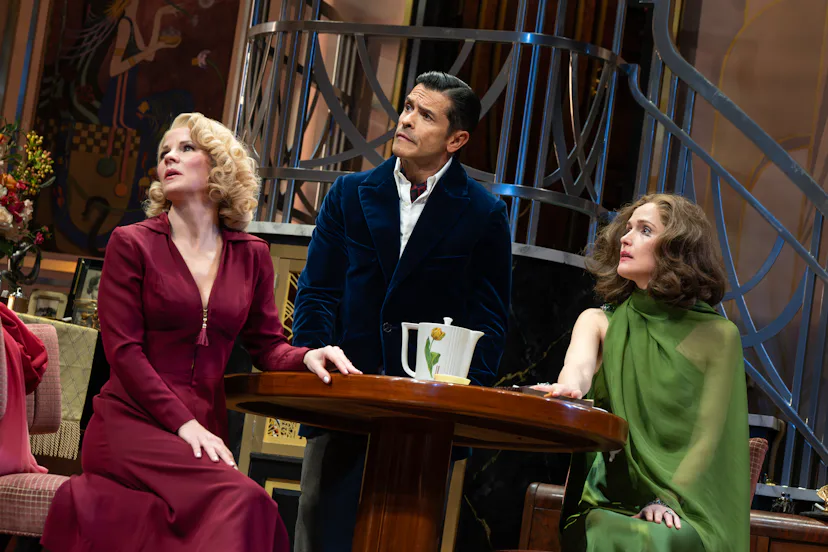
In Fallen Angels, Kelli O’Hara and Rose Byrne star as two friends who learn that a lover they’d shared before they got married is returning to town. As the women anxiously await his arrival, the evening devolves into martini- and Champagne-fueled confessionals punctuated by moments of jealousy and competition. “The play was incredibly ahead of its time and was banned and almost not allowed to be on until it was just decided that it was so farcical and would never happen in real life — as if women would ever have such desires,” says O’Hara, 50, who, like Byrne, was Tony Award-nominated for her work in the show. “We tried to just have a little bit more agency in the storytelling, and also really make it about our friendship and lean a little against the rivalry by making it a shared passion — even though we, of course, get drunk and get mad at each other.”
Ahead, O’Hara touches on working with Byrne, the roles that fulfill her now, and memorable stage-door interactions with fans.

On the power of female friendship:
Some of the most important relationships in my life are my female friendships. Right now, I’m also doing a show that I’ve built with Sutton Foster, and we’ve walked alongside each other in this business for 25 years. We’re in two completely different lanes — we’ve never been competitors — but at the same time, we’ve made each other better.
I think Rose and I walked into this project saying, “We’re going to be better together. You’re going to do your thing. I’m going to do mine. We’re nothing alike.” And yet together we’re more powerful. Once you get to a certain age, you realize what it is that you bring to the table and what it is that you don’t bring to the table. And when you’re ready to accept that, you look around, and you say, “Well, who’s the yin for my yang?”
On the dynamic with Rose Byrne:
She’s a comedian through and through. She came in with the bold choices. And so I definitely watched those bold choices. We also have the benefit of these two characters being written really beautifully different. One is the alpha; one is the wild card. One has to be holding down the fort, one has to be going off the rails, and then they switch places. And so I think we recognize those differences and then leaned into them as opposed to trying to jump on the other one’s path.

On the roles that fulfill her now:
Even from the beginning, I’ve always said, “I want to do exactly the opposite of what I’ve just done,” because I feel like I’m trying to grow and learn. So if I did a very, very dramatic part, I wanted to then do a musical comedy and then do a Shakespeare play and then come back and do another musical comedy. The last show I did on Broadway was Days of Wine and Roses, which was a terribly sad story. To come and now do this comedy right after is so refreshing, especially at this age. A lot of the roles, especially in television, I’m playing some pretty angry or sad or heartbroken woman.
And what a fun thing to get to play, at my age — this sexual, passionate, hungry, funny, alive person. I’m going to be looking for the people who want to create those energetic, full-of-life characters even after 50. Let us be bold. Let us not decide that life ends.
On her pre-show routine:
There’s something very beautiful and calming to me about an eight-shows-a-week schedule. It’s hard for my family and for my life, but there’s also something very secure about it. It’s a rhythm and a regimen, and I like that. I eat better. I drink a lot more water. I take better care of myself because I must.
When I come into my dressing room, I like to do a lot of stretching out of necessity — a lot of yoga stretching — and I like to get those endorphins going. I like to do inversions, which is something that might sound strange, but it gets all the chemicals rushed to the right places. I like to get to the bottom of my breath and just relax. And then it’s almost like you can free-fall into the show. I don’t want to be ratcheted up before I start. I want to be really, really calm. And I’ve grown to realize that about myself. I won’t call the show a storm because I think of it more as a celebration, but it’s almost like the calm before the party.
On stage-door run-ins:
After This World of Tomorrow, I had the funniest exchange where I came out. This man thought he was giving me a compliment and said, “I came to see you do a play because I didn’t know you were an actress. I’ve seen you for years and years and years but I didn’t know you were an actress.” And I remember just thinking, “Oh, that’s an interesting take.” It just confirms the fact that you can really never worry too much about how you’re perceived. People are going to feel how they feel. I do definitely have people say, “Well, why didn’t you sing? You didn’t sing anything.” And I’ll think to myself, “Well, you knew this was a play, right? You knew that I wasn’t going to sing.”
On limiting screen time:
I’m acutely aware right now of allowing myself to be overly influenced. I’m going to use the word influence because that’s what I mean. In our world of social media, it’s almost like we’re forgetting how to make our own decisions — “Oh, that’s what I should be doing. Oh, I didn’t know I should be doing that.” And then you do it, and you’re like, “Wait, that doesn’t work for me the way it worked for that person that told me I have to be doing it.”
And so I’ve definitely jumped on the bandwagon — especially, again, I’m going to say at this age where it’s like, “Oh, I don’t know, this is a new territory so maybe I should be adding all this creatine, and protein, and whatever.” And I’ve actually gotten myself into a bad place in the past of listening and then going, “Oh, wait, no, this isn’t what’s best for me — I know what’s best for me.” And then, when I get back to myself and to trusting who I am, I get back on a great path.
On the power of moderation:
What works for me best is having enough protein but not pounding protein. I don’t eat a lot of beef because it doesn’t agree with me, so my sources of protein are different. What also works is definitely lots of vegetables and fruit, and a lot of hydration, whether it’s water or coconut water. I lift a little bit of weights, but not heavy weights. I never have, and light weights have always worked better for me.
Make sure you’re still making the final decision. Don’t start to put something else in the first position, in the lead position. At the end of the day, you approve the final cut of any choice you make.
