Theater
How Duncan Sheik’s Final Musical Is Carrying His Legacy Forward
Director Rob Ashford and star Sophia Anne Caruso reflect on bringing the artist’s final project, Memoirs of Amorous Gentlemen, to the stage after his death.
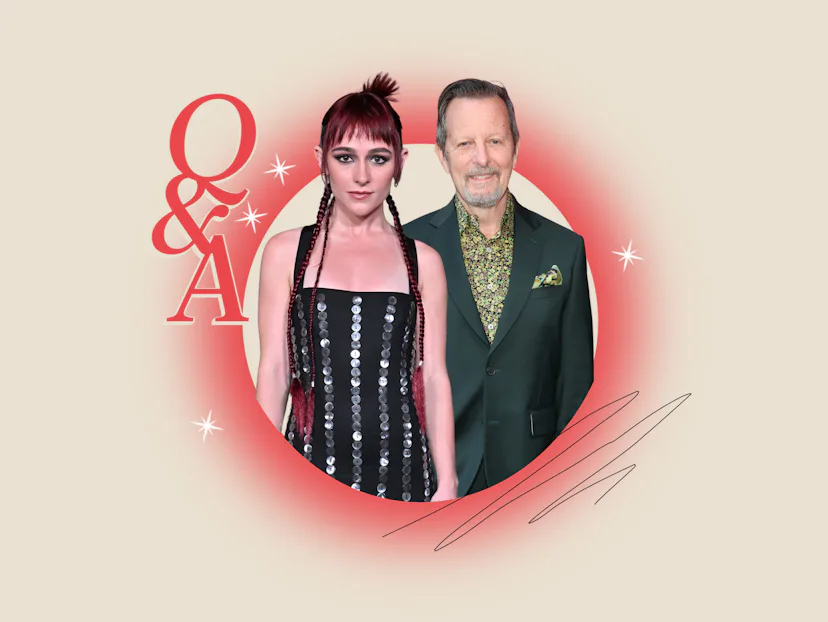
Memoirs of Amorous Gentlemen’s road to the New York stage has been filled with imagination, passion, and, as happens all too often in life, the shock of unexpected loss.
Based on Moyoco Anno’s popular manga, the new Off-Broadway musical opened Oct. 15 at The Night Egg at the Culture Club in Lower Manhattan, making history as the first English-language American musical inspired by the Japanese art form.
However, a colossal void was left in the midst of Memoirs’ most triumphant chapter when Duncan Sheik — the Tony-winning composer behind the show’s music and lyrics — died in mid-September, just one week before previews began.
The sudden tragedy left the musical’s cast and creative team grief-stricken and reeling, with mere pieces of what promised to be the most experimental musical of Sheik’s career: No new ballad could be added at the eleventh hour, no musical reprise teased out to finish the story.
“It was very, very tough on everyone,” director Rob Ashford tells Bustle. However, the Tony winner also found the experience “very binding” for the company as they sought to do justice to their late friend and collaborator’s final work.
“It felt like we had another reason to do the show other than for a good review or success or full houses,” he says. “It was for Duncan.”
Below, Ashford and star Sophia Anne Caruso open up about bringing Memoirs of Amorous Gentlemen to life in the wake of Sheik’s passing and what the show means for the late composer’s legacy.

Memoirs really seems to be breaking new ground within the realm of musical theater. What excited you most about the project?
Rob Ashford: Well, I’ve worked in Japan, I love it there and I love the people. And the point of view is so interesting. So when this project was brought to me, I thought about how interesting it would be to try to maintain the otherness of not just Japan, but of a graphic novel on stage, and trying desperately not to turn it into a typical or formulaic musical.
Sophia Anne Caruso: Duncan asked me to do it, because he and I were friends. So I really kind of did the first workshop as a favor. I hadn’t done a musical in a long time. I was like, “I need to take a break. I don’t know if musicals are for me.” But then Duncan asked and I was like, “Yeah, sure, I’ll come in and help you develop it,” and I just totally fell in love with it again. I got that itch that was like, “Oh, maybe you want to do a musical again…”
Memoirs’ score feels so unmistakably Duncan Sheik. What makes his music so unique?
Caruso: I think a lot of musical theater numbers are meant to just further a plot or give you information. But that doesn’t always make a song impactful. Duncan’s music almost stops time, and it gives you a portal into a core emotion or something very universal to connect to. Duncan was a one-of-a-kind songwriter, and certainly, there will never be another like him.
Ashford: His understanding of the dramatic moment — embracing it and playing against it all at the same time. That's a hallmark of his. And also the language of the lyrics, trying to keep the manga alive in the otherworldliness or the raciness. I mean, it’s not being racy for racy’s sake, but not many opening numbers say “Carrot up your a**.”

What has the experience been like opening the show in the wake of Duncan’s passing?
Ashford: Everyone had a different journey with him. Some of the actors had only just seen him in the auditions — they didn’t have time with him that some of us had. And some people in the cast, like Sophia, had worked with him on numerous occasions. So it was very difficult but it was also very binding.
Caruso: Above all, Duncan and I were friends. We were collaborators, obviously, on this show and elsewhere. But we go way back, and it was devastating. I knew he wasn’t doing well, and we missed him throughout our rehearsal process. When you’re doing a new musical, it’s pretty standard to have the writer there making new material and working on the show. I knew Duncan was sick but I thought we’d maybe see him. In my head, I had the highest hopes for [him] getting to finish the show.
A challenge has been that we didn’t get to finish it with him. We had to work with the material we had from him instead of expecting new songs or new material. And in an emotional way, the grieving part is really hard. But I’ve sort of delayed it for myself because I decided that I had to redirect that energy into making the show good — making sure that his music sounded great, and that I sang it well, and that I was doing right by him. He had left it in our hands to finish.
Do you feel protective of Duncan’s creative vision for Memoirs?
Caruso: I can’t speak for the rest of the cast, but the people who knew Duncan closely and intimately, like our playwright, Leah [Nanako Winkler], and Or [Matias], our musical arranger… we definitely have a protectiveness around it. If I see something that makes me think, “Duncan would hate that,” I always say it. There was an executive decision made not to change any of Duncan’s lyrics. So even if something was trimmed out, we’d have to have a very good reason and a discussion about why. I feel like I hear his voice in the back of my head sometimes. We want to do right by him.

How do you view Duncan’s legacy in the world of theater?
Ashford: I want it to be what it is, in that he was beloved and loved, that he was a genius, and how lucky we were in the world of theater to have him turn his head toward us and find that he loved telling stories and writing scores for musicals. We were blessed.
One thing this show does is that it shows where he was musically at this time. You know, Spring Awakening was a few years ago. And Nero was as well, even though it’s just being put out there now, and American Psycho. So this is the latest of where he was creatively, what he was thinking about, and how he was putting the notes and the words together.
How do you hope Memoirs will add to that legacy?
Caruso: I hope that it has a similar effect to what Spring Awakening did for young people. To this day, Spring Awakening has inspired and empowered generations of young creatives. And I hope that Memoirs has the same effect for young women, specifically. We rarely get to see a show about a young woman and her messy journey with her artistry. So I hope that it reaches the right people. That’s all I could hope for.
These interviews have been edited and condensed for clarity.
