Quick Question
Jen Pelka Says The Best Things Happen Outside Your Comfort Zone
Why the co-founder and CEO of Une Femme Wines says growth sometimes requires taking the leap before you feel ready.
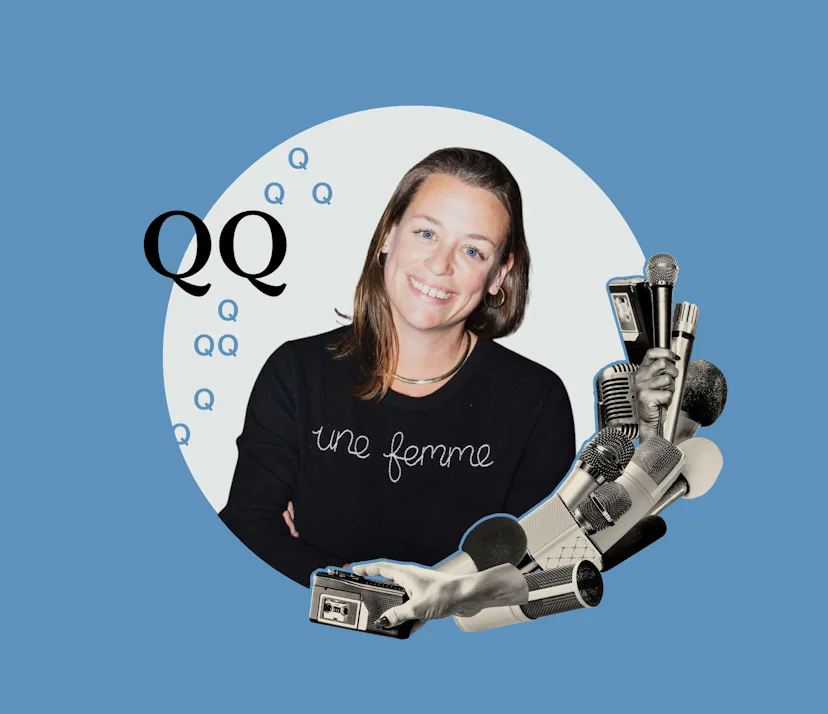
When Jen Pelka was running The Riddler, her two New York- and San Francisco-based champagne bars, she didn’t initially have designs on launching a wine brand of her own.
“We had hundreds of champagnes available by the bottle, and a lot of our guests would be like, ‘I don’t know how to pronounce this,’ or, ‘I don’t know, it’s just like a big champagne list to look through,’” she says. “We started featuring women-made wines, and they would outperform everything else. And so I was like, ‘Why is there not a brand that’s all about celebrating women-made?’”
The result, Une Femme, became The Riddler’s house pour. Although Pelka had to close the bars during the pandemic, she realized something viable remained, and she and her brother and cofounder, Zack Pelka, decided to focus on turning it into a boutique wine brand. That goal quickly evolved in ways they couldn’t have predicted, however, after a meeting with Delta Air Lines, which had asked her husband’s restaurant group to create the menu for Delta One’s transcontinental flights. The Delta team was taken by Jen’s rosé and asked her to collaborate with them that October for awareness around breast cancer research.
As the partnership grew, Une Femme developed its pours to be packaged in cans (they’re easier to recycle than glass and easier for flight attendants to open in the air). Now the airline serves all four of Une Femme’s offerings — a bubbly, plus sparkling rosé, chardonnay, and red blend — in its main cabin.
“Our relationship with Delta changed the course of the company,” Pelka says.
Since then, Une Femme has grown into the third-largest canned wine brand in the U.S., with other partnerships including Marriott and Virgin Voyages. Through it all, what’s propelled Pelka forward is a willingness to take risks, stay grounded, and constantly innovate (she’s an unapologetic evangelist of AI). She recently launched a Substack, Someday in Sonoma, featuring behind-the-scenes Une Femme content as well as recipes with wine pairings. “It’s really cool because it’s like a little glimpse into what our life is like in Sonoma,” she says. Ahead, Pelka shares how she’s overcome challenges, her best career advice, and how her definition of success has evolved.
Let’s rewind a little bit to COVID. You had to close The Riddler, and I’m sure that was very difficult. How did you pick yourself back up, or what got you to the other side?
It’s resilience and grit, but then it’s also just a passion for what I do. COVID was an incredibly challenging time for everybody in the industry — emotionally, from a business standpoint, et cetera. Two other things happened around the same time, which for me put a lot of it into perspective: Our house burned down in a wildfire, up in wine country in Healdsburg, and we lost basically everything that we owned. So that was incredibly tough, and then my father passed away from cancer around that same time.
Each of those things was really, really hard, and just as much as you grieve losing a person, you grieve losing a business or losing a home. Through all of that, I’ve come out the other side just realizing how much gratitude I have for the here and the now and the everyday. I do work that I really love with people I love to work with, which includes not only our team but also the partnerships that we have. I’m in the wine business — it’s a fun industry.

And as you were transitioning from The Riddler to launching Une Femme, how did people react? Sometimes you can get really good career advice, and sometimes you get really bad advice that you just have to ignore.
The greatest amount of support I got was from many of our investors and then also many founders. Even though The Riddler was in a situation where we had to close the business, and investors did not receive their capital back, a lot of our investors were founders themselves — some of whom had been very successful, and some of whom had been through all kinds of ups and downs. And I think the only people who really understand how hard it is to be an entrepreneur are also entrepreneurs.
Two pieces of advice that I go back to all the time are from my husband: One is, worrying is basically like sitting in a rocking chair. You’re just going back and forth and back and forth but going nowhere at all.
That’s a really good analogy that I’ve never heard before.
Like, it’s pointless. So that’s one. And then he also always tells me, life happens outside your comfort zone. I’m pretty open to taking on risks, but I do occasionally get to a place where I don’t quite feel ready to make a jump, and he’s always like, “You know, that’s where all the good stuff happens.”
And just having a thought partner, whether that’s your romantic partner or a close friend, having that support system helps push you forward.
Completely. I’m so fortunate that my husband is also an entrepreneur. When we first met, neither of us had our own business yet, and in that time he’s grown to having six restaurants and I’ve grown to having two restaurants and then now have this wine brand. So we’ve been through all kinds of ups and downs together in our businesses, and it’s so helpful to have someone who knows how challenging it can be and also celebrates those highs.
The other thing is, my cofounder is my brother, and there’s no chance that we would be as far as we are if we were not cofounders. Both of us contribute very different skills to the business: He’s a hardcore business, operations, logistics, finance guy. He’s now very involved in AI, and so he’s got all of us hardcore on the AI train — I’m a big pro-AI person, which I realize is a controversial take... but is it? I don’t think it should be. Right now I’m sitting here looking at this dashboard that Claude just built for me with better analytics than I’ve ever been able to have in seven years in this business. I worked on it for two hours today.

Then you can free up your brain space to do the really fun, creative human stuff that obviously no AI or chatbot can do. What’s been the hardest thing that you’ve learned as a leader?
It’s all about continuously reevaluating your business and yourself to really understand what your greatest strengths are, and then find other people who love to do the work that you’re not so great at. As founders or leaders, we so often feel like we need to try to do everything, and the real power is in allowing other people on your team to take the reins.
And how has your definition of success evolved since you started out?
The biggest shift for me happened when we moved to Sonoma three years ago. I’m definitely much less ego-driven. I don’t really care about awards or press or being a household name unless it serves my ultimate goal, which is creating things that I believe in and that make an impact. And also, having the freedom to spend as much time as possible with my husband and our dog outside in the sunshine, gardening, cooking — you know, being with the people who I really love.
I’m in New York this week, and I love being in New York, but when you’re here, so much of your daily life is thinking about who can you partner with? I care very much about those things, but I’m in a phase of my life where I enjoy a quieter pace at home. I love collaborating, but I guess [laughs] I like people to come to me now.

Finally, I’m sure every day looks a little different, but do you have a basic structure in terms of a routine, or productivity habits?
My husband and I wake up around six or seven, and the dog jumps into the bed and gives us lots of kisses. Then we read in bed for about an hour — I’m a big, big reader. I try to read about a book a week. After that I’ll check the news and just a few basic things on my phone, but I try to spend very minimal time on it during the morning.
And then we do Wordle, followed by Connections, followed by the Mini Crossword, and then this game that’s not in The New York Times, it’s called Tweenle. I do a five-minute gratitude journal, and then we get up and take our dog for a walk. There are vineyards across the street, so we do a vineyard walk and then maybe get a workout in, shower, get ready for the day. It’s kind of like a two-hour routine.
You do, like, every single thing that everyone recommends — read, journal, stay off your phone, walk the dog, go for a walk and get fresh air, exercise.
The other fun productivity hack — and I don’t know why it took us so long to figure it out, and I think everybody should do it — we moved our coffee maker into our bedroom.
That’s absolutely genius.
We set it the night before, so in the morning we just drink coffee in bed while we’re reading. It’s a tiny little change, but anyone can do it, and it doesn’t cost anything.
This interview has been edited and condensed for clarity.
