Red Carpet Secrets
Anne Hathaway’s Tiny Braid Trick Is Basically A Facelift For Your Hairline
But the viral hack is one that experts say comes with real trade-offs.
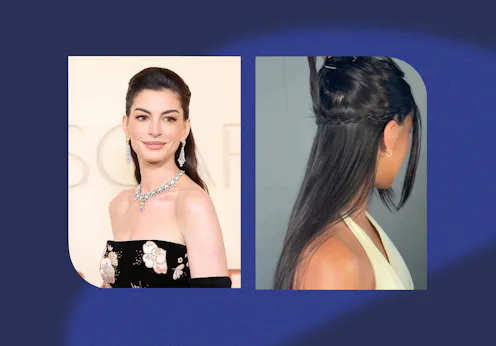
Anne Hathaway might be the queen of aging in reverse, but the actor recently revealed in an interview with Elle that her especially snatched appearance as of late isn’t the result of cosmetic surgery — and the look is already taking over social media.
The secret comes courtesy of a hairstyling trick used by her stylist Oscar Pita for her Oscars glam: creating two tiny braids near her temples, pulled taut, and hidden beneath the rest of her hair.
In effect, it’s a facelift ponytail minus the pony, meant to instantly lift the areas around the eyes, ears, and cheekbones. And unsurprisingly, people wasted no time trying to recreate it for themselves. But the viral hack also taps into a long-running beauty trend that trichologists say comes with real trade-offs.
Keep reading for everything to know about facelift hairstyles like Hathaway’s — and what a scalp expert wants you to know about the tension behind them.
Facelift Hairstyles Are Everywhere
Hathaway's braid trick may be the latest version to go viral, but it's far from the first. If you've ever worn a slickback bun and felt like your features looked a little more lifted, you already understand the appeal: looking more lifted, sculpted, and well-rested without spending a dime.

The catch? "When a hairstyle creates that lifted effect, it's coming from tension on the hairline and scalp," says Tina Mui, trichologist and founder of AWARE Hair. "The main concern with a style like this is traction alopecia, which is hair loss caused by repeated pulling on the follicle."

The key word there is repeated. Wearing taut braids to a wedding or a night out isn’t so much a concern as making them part of your daily routine. "The first few times are usually fine," explains Mui. "But when the same hairs are being used again and again to create lift, especially around the temples or edges, that becomes a lot of pressure on very delicate areas."

While breakage can happen after just a few tight wears, traction-related thinning usually develops over weeks or months of repeated tension. The tricky part is that you might not realize you're putting stress on your hair in the first place. "A hairstyle can feel comfortable at the time and still create stress on the scalp if it's repeatedly pulling on the same small group of hairs," says Mui. "If you take down a ponytail, bun, braid, or clip-in and feel that little sense of relief, that's a clear sign there was tension."

Shedding after taking down a style isn't necessarily a red flag, but snapped strands, itching, redness, bumps, or a widening part line can all be early warning signs. Not every hairline has the same tolerance for tension, either. According to Mui, those with fine hair, curly or coily hair, postpartum shedding, menopausal thinning, or hair that's been bleached, relaxed, or heat-damaged should err on the side of caution.
How To Safely Lift Your Face
Thankfully, if you want a little extra lift, you don't have to give up facelift hairstyles — including Hathaway's — entirely.
"The safest approach is to use the least amount of tension needed to create the effect," says Mui. Her pro tip: skip the fragile baby hairs at the very front of the hairline and instead take a slightly larger section farther back so the pressure is distributed more evenly. "You should be able to smile, move your eyebrows, and turn your head without feeling a tug at the temples," she says.

If you've already noticed thinning from years of slickback buns and snatched ponytails, don't panic. "The first step for regrowth is to stop the repeated tension immediately," says Mui. From there, focus on looser styling, minimizing heat and chemical damage, and being gentle when detangling. Mui also recommends regular scalp massage or gua sha to help release tension and encourage circulation. Just don't expect overnight results: “Early regrowth can begin within one to three months, but most people need three to six months before they see a noticeable difference,” says Mui.

Bottom line: facelift hairstyles like Hathaway’s are probably best treated like shapewear for your face — great for special occasions, less ideal for everyday wear. Your undereye bags might thank you for the lift, but your hairline will greatly appreciate the occasional day off.
