Sporty Chic
The Athletic Blush Trend Is Giving "I Just Finished Pilates"
Look winded, in a cute way.
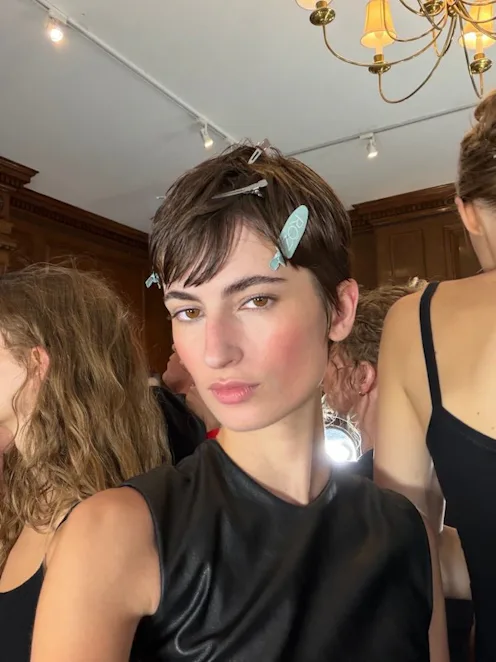
To anyone who still looks cute after a Pilates class: How does it feel to be God’s favorite? While most people are beet-red and avoiding eye contact on the walk home, you’re reveling in your post-workout glow — rosy cheeks, radiant skin, and all.
Jealous? Same. But luckily, the right rouge placement can give a similar effect. Meet athletic blush, the sporty cheek trend that’s been getting quite the workout on the Spring/Summer 2027 runways.
Ahead, a pro makeup artist breaks down what makes the fresh-from-the-gym look different from the blush trends before it — and exactly how to recreate it yourself.
What Is Athletic Blush?
Warm and dewy, athletic blush “sits low and central on the cheek rather than being lifted toward the temples,” says celebrity makeup artist and Ciele founder Nikki DeRoest. “You’re not using it to sculpt the face.”
Instead, the goal is “to make your complexion look alive,” she says. Think the kind of flush you might get after a round of squats, in the most flattering way. Not sweaty, just slightly overheated — basically, the literal “picture of health.”

By keeping the color mainly on the apples of the cheeks and blending it down, you’re mimicking the places your complexion naturally warms up when your blood starts pumping. A dewy, sheer finish makes it look that much more believable, too.
“You still want to see the skin underneath — the freckles, texture, and luminosity,” DeRoest says. The color should look like it’s coming from underneath your skin, not sitting on top of it.
Why It’s Trending
Athletic blush has been all over the Spring/Summer 2027 runways, from New York to Milan. At Kallmeyer, Shain Kish, Saie’s global artistic director, created what he described as a high-energy, athletic blush. At Paolina Russo, berry blush — actually, lipstick — got brushed along the models’ lower cheeks, all the way into their jawline. Courtesy of makeup artist Vilde Feste, the fresh-faced placement quickly made the rounds on Instagram, where some commenters were quick to make another comparison: “Rosacea makeup?! I’m here for it,” one wrote.

Of course, it’s far from the only low-slung blush placement that’s been trending lately. Boyfriend blush gave cheeks a relaxed flush a few years ago, while the more recent Brontë blush put a windswept finish on the look. Athletic blush just takes that whole lived-in approach to color one step further. “This feels even more undone and transparent,” DeRoest says. “The runway versions almost look accidental, which is what makes them feel cool and modern.”

After years of clean-girl beauty, athletic blush looks appropriately hot and bothered. “There’s something appealing about makeup looks that are a little less perfect right now,” says DeRoest. “Skin still looks like skin, and the color feels like it belongs there.”
How To Recreate The Look
Trying athletic blush for yourself isn’t anything to break a sweat over. First, choose a shade that looks like you just ran a few miles — or maybe were simply born with perfectly rosy cheeks.

“The key is that the shade should have enough depth to register on the skin, but still look believable,” DeRoest says. For fair skin, she recommends roses and peaches; medium and olive tones can go warmer with terracotta; and deeper complexions can reach for berries and brick reds.
Despite the dewy end result, DeRoest prefers a soft, diffused powder formula for this look because it lets you build the color in whisper-thin layers. “Start with almost nothing and slowly add until it looks like the color is actually coming through the skin rather than covering it,” she says.

For placement, use your natural flush as a guideline. “I’d start around the apples of the cheeks and blend slightly outward and down,” says DeRoest. “You can bring it a little lower than you normally would, but I wouldn’t take it so low that it starts dragging the face down.”

Instead of bringing the blush underneath your cheekbone, “keep the concentration on the fleshiest part of the cheek and diffuse everything around it with a brush or damp sponge,” DeRoest says. “There shouldn’t be a hard beginning or end to the color.” After all, you want people wondering where you work out, not what blush you’re wearing.
