Glam Shift
When Did Makeup Stop Being So Sexy?
Selena Gomez’s viral smoky eye sparked a bigger realization: people miss makeup that actually looks done.
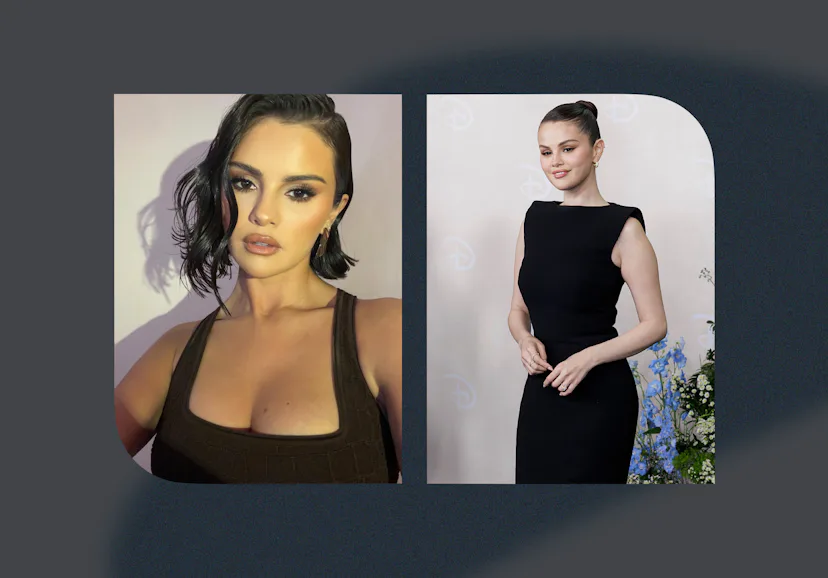
This week, Selena Gomez did something that shouldn’t have rocked the timeline, but did: she wore a smoky eye. Well... on one side of her face, at least.
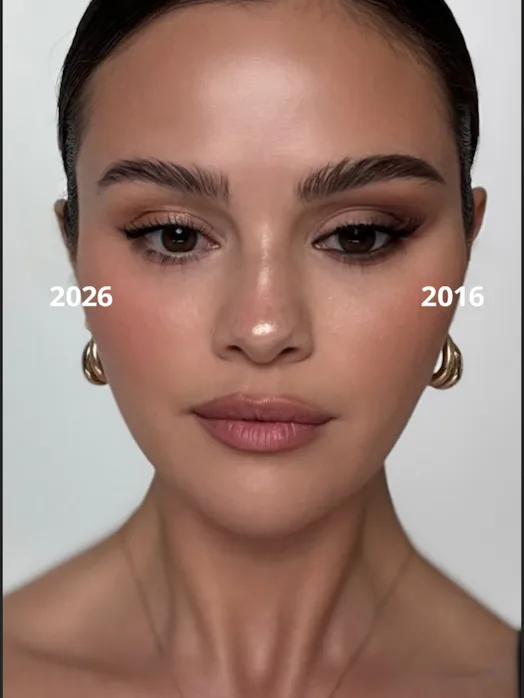
On April 14, influencer Desi Perkins posted a YouTube video with the “Come & Get It” singer, where she did one half of Gomez’s face in full 2016 glam and the other in a more minimalist 2026 style.
Gomez herself seemed pretty clear on where she stands: “Sorry, this has got to be my vibe,” she said, pointing to the pared-back, modern side — before adding, “But it’s actually crazy that I don’t mind both.”
Her fans, meanwhile, were overwhelmingly in favor of the throwback. The comment section quickly filled with people asking for 2016 Selena back, saying her face is “built for this,” even joking that the smoky eye finally put an end to the clone allegations.
Beyond picking sides (literally), everyone seemed to land on the same realization: Makeup can completely change your face. It’s kind of like, duh, of course — but maybe it’s not so obvious anymore, considering we haven’t really been using it in that way.
For the past five years or so, the focus in beauty has been on enhancing what’s already there, with trends like “clean girl” and “male gaze” makeup dominating — both rooted, in different ways, in the idea that makeup should enhance rather than announce itself. Even the products themselves reflect that shift — serum foundations, lip oils, and cream blushes designed to melt in and disappear.
Very little has been about transforming, exaggerating, or — god forbid — carving out your features with makeup. Makeup started to hide its own labor. Looking pretty (read: effortless, natural) started to take precedence over looking hot (read: visibly constructed). But judging by the discourse around Gomez’s decade-old glam, that may not be the case for long.
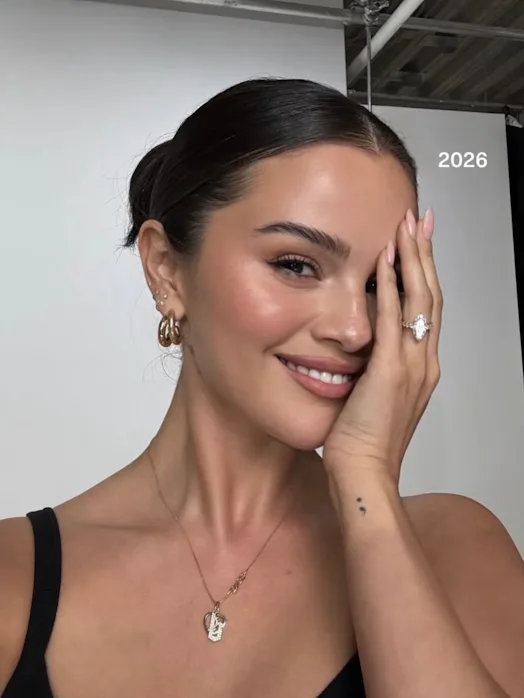
If you go through her makeup evolution, it’s easy to see what people are missing. Around 2012, as Gomez moved out of her Disney Channel era and into more mature songs and roles (hello, Spring Breakers), her makeup followed suit. The gloss-and-liner look gave way to something smokier and more sultry. By 2016, that style was ubiquitous: bronzed and mattified, with extended shadow, dramatic wings, strip lashes, and filled-in brows — you couldn’t miss it, it was makeup that demanded to be seen.


By the time Rare Beauty launched in 2020, Gomez’s look had settled in a different direction. It leaned into softer shadows, seamless blending, and an emphasis on skin — all perfectly in step with her brand and with where beauty trends, in general, were heading: easy to wear, understated, and tasteful in a way that made anything more obvious feel slightly gauche.
To be clear, the less-is-more approach to makeup isn’t a bad thing. It looks gorgeous and youthful in its own right. It just reflects a totally different idea of what makeup is supposed to do. Somewhere along the way, we traded fun, experimental glam (and cut creases) for “good” taste — and in doing so, flattened everything out a bit.
That kind of trend shift isn’t random, though — it’s just the reactive nature of beauty. Every generation has its own idea of what looks good, aspirational, sexy. The ’90s had that undone, messy chic thing. The 2000s were all gloss, frost, and sparkle. The 2010s went full glam, complete with defined brows, smoky eyes, and lots of contour. Ours just happens to feel particularly sterile — less bombshell, more girl-next-door. (“I woke up like this” really was a cultural reset, to be fair.)
The positive consensus behind Gomez’s smoky makeup, however, suggests Gen Z may be rediscovering what every generation before us seemed to understand: makeup should look like a choice. Not because anyone actually wants a full 2016 revival, but because maybe it’s better to look back in 10 years and cringe at the cut crease than realize beauty got so tasteful and restrained that we missed the fun entirely.
