Books
How A Bustle Story Inspired A New Book About American Girl Dolls
An American Girl traces the 40-year history of the beloved brand and its famously elusive founder.
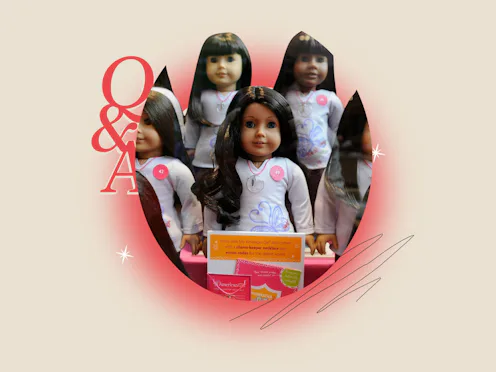
I’m in the middle of telling Amanda FitzSimons about my childhood American Girl collection when she starts to look pensive. “I think I can guess how old you are,” she says, laughing. “People’s references to the brand give you hyper-specific information about their age.”
I told her about my first doll, Kit Kitteridge, a Great Depression-era tomboy, followed by Julie Albright, the Flower Power-era San Francisco native with divorced parents, and Rebecca Rubin, the daughter of Russian immigrants growing up in New York City circa 1914, whom my parents rushed to buy when the brand put out its first-ever Jewish doll.
“A lot of girls who had Julie were born in 2003,” she says.
“Close,” I say. “2002, but my birthday’s in December.”
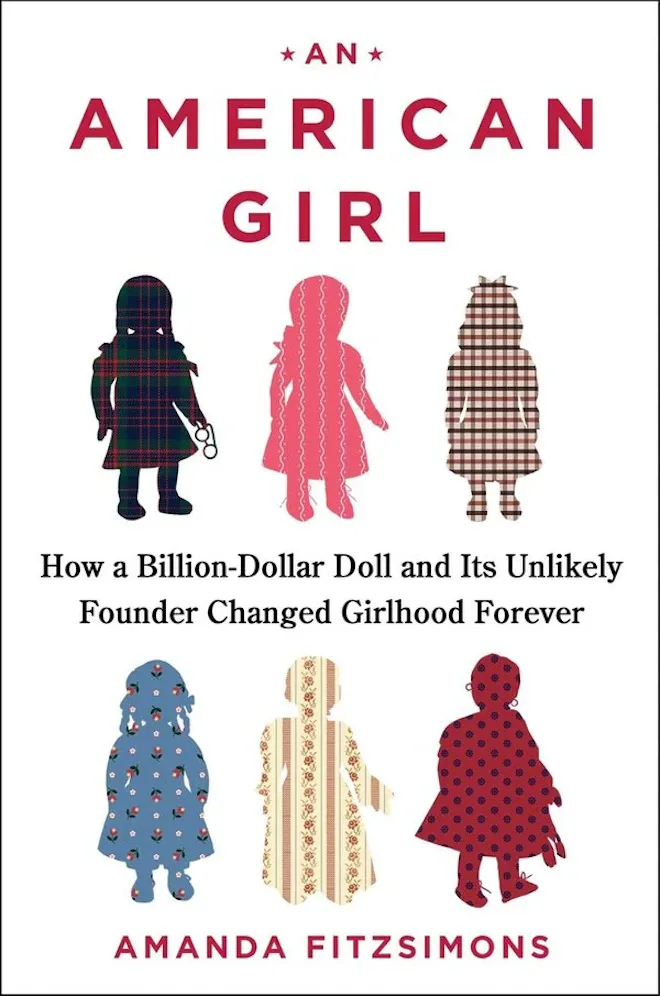
FitzSimons has been honing this party trick for nearly five years while working on her debut book, An American Girl (out now). The book carefully traces the company’s 40-year history, from its founding as an answer to concerns around Barbie and Cabbage Patch dolls to its eventual sale to Mattel in 1998 to its legacy today. FitzSimons also delves into the world of its trailblazing founder, Pleasant Rowland, who, although famously elusive, is still the drumbeat of the brand.

But before An American Girl was a book, it was a Bustle story. In March 2022, New York-based magazine writer and editor FitzSimons was approached by editor Chloe Joe to write a feature about Aurora, a controversial small village in upstate New York owned by Rowland. At the time, American Girl was back in the cultural conversation with memes like “We need an American Girl doll who got Tumblr Famous in 2012” and “We need an American Girl who gets a UTI” taking over the internet, and both FitzSimons and Joe felt like there was something intriguing beneath the surface. How did a line of high-end dolls come to occupy such a unique place in the hearts of generations of women?
“I didn’t know the story behind the company when Chloe got in touch with me,” says FitzSimons, 41. “I knew the name Pleasant Rowland, and I knew Mattel had bought [American Girl], and I remember also being sad that the brand had changed in ways that I didn’t like.”
Research and reporting took six months and inspired FitzSimons to delve further into the company’s history. “I remember writing the first draft of this story, and it flowed so quickly. When I got to the bio of Pleasant, I just was like, ‘This is such a fascinating story. Why has no one told it?’” she says. “It was a story, in my opinion, that was so much bigger than the town.”
Below, FitzSimons opens up about taking An American Girl from a Bustle story to a book.
Which American Girl dolls did you grow up with?
I had Molly and Kirsten. The reason that I had Molly was because her stuff was old-timey but not foreign to me. She had pajamas with pants. It wasn’t like a colonial lappet bonnet. Kirsten I picked because she was blonde and I was blonde.
So many people will talk to me about why they picked what doll they did. But my preferences skewed so superficial.
Pleasant famously refuses interviews. How did you build her character without having her participate?
I’ve profiled a lot of people and had access to them and still had not much to work with. But with her, there is. You look at her creative output and just work backwards. So many of the things that she thought about were way ahead of her time. It was brand-building. She would say things like, “I’m not in the doll business, I’m in the little-girl business.” And today, it’s almost cliché to say, “I’m not selling sneakers, I’m selling a lifestyle.” But I mean, back then, especially marketing to children, I don’t know if there were so many brands that were thinking on that level.
I think there was a mission that was very worthy in the sense that girls from ages 7 to 12 were not taken seriously as consumers. The idea was to try and make them feel older, and that was an indirect way of making them feel important. In the end, what she was really selling to girls was feeling seen. And, well, you’re going to make a billion dollars on that because that is a powerful emotion.
What was the most interesting thing you learned while working on this project?
I loved researching the degree to which each little item in the catalog was so carefully considered. I have an anecdote in the book about Samantha’s penny — all the pocket change that came with her character were [reproductions of pennies from] 1904, because that’s her year of origin. There was a painstaking amount of detail that goes into keeping these dolls meticulously historically accurate.
Those catalogs were so fun.
Yes, they really were. And I think when you’re 9, you just like it and you take for granted how brilliant the person behind it would have to be to come up with it.
I remember wondering, how did I start getting the catalog in the first place? The Pleasant Company didn’t have TV commercials, and they weren’t sold in toy stores. So how did I find out about it? And I remembered when my brother was born, my aunt got me a Bitty Baby, and those are the baby dolls that American Girl sells. It came in a beautiful Moses basket. I realized that because I got that as a gift, we started getting the catalog at our house.
When you think of it, what do they know? Well, you’ve got one girl in the household and there’s just probably been a second kid, so 50/50 chance you’ve got another customer.
This interview has been edited and condensed for clarity.
