Books
Bethany Joy Lenz’s Quiet Rebellion
The former One Tree Hill star opens up about her new novel.

Note: This story discusses violence and emotional abuse.
Bethany Joy Lenz was just 12 years old when she penned her first novel on her family computer. “We just got a new Mac when they first came out, and the unit was massive. It was like I’m on my AOL dial-up, and then I was on the computer writing this book,” she says. “It was about a girl named Lucretia who I called Luke, and she had a best friend who was a guy, and there were bullies at school. I mean, I was just processing my own life, I’m sure.”
Lenz never published Luke’s story, but 33 years later, her debut novel, The Betrayal of Cora Wexford, hit shelves this week. It’s historical fiction inspired by real events: a string of 11 killings in London’s East End between 1888 and 1891 known as the Whitechapel Murders, with at least some attributed to Jack the Ripper. The story follows Cora, an American expat and postmortem artist painting intricate portraits of the city’s most marginalized women as a serial killer terrorizes London. On the eve of her 39th birthday, she meets Miles Vale, a handsome and suspiciously charming stranger. As their relationship develops, Cora finds herself in a twisted game of psychological manipulation and gaslighting.
“It became clear to me that the best way to tell this story was to parallel the horrendous psychological and emotional violence that so many of us still experience today,” she says. “It’s an unspoken thing that we don’t have language for. It’s unseen, right alongside also very real violence that is seen because it’s physical. The courts don’t know what to do with it.”

For those who read Lenz’s bestselling 2024 memoir Dinner for Vampires, aspects of Cora’s story may sound familiar. At 20, two years before she began starring as Haley James Scott on One Tree Hill, Lenz attended a Bible study with a friend. What would follow was 10 years in a high-control religious cult that would extort her of more than $2 million and coerce her into a marriage.
Many of Cora’s experiences of confusion and isolation came from Lenz’s own experience. “I put myself into her as much as I felt was appropriate,” she says.
That’s not to say the work was easy. “There was a heavy lift writing this book in a short period of time: all the research I had to do, all the characters that needed full development, the world that needed to be explained in a luscious and attractive way so that readers didn’t feel like they were slogging through one heavy theme after another,” she says.
Below, Lenz opens up about the research process, painting her own book cover, and feeling rebellious.
How did you know you wanted to dip your toes into fiction?
It’s all I’ve ever really wanted to do except sing and dance. It’s how I express myself, even if nobody else gets to see it, because I just need to get things out of my body. Having something on paper helps my neuro-spicy brain remember things and keep them in order. This is just a total, total dream come true, and I’m really excited I got the chance to do it.
You write about London with such precision. How did you go about researching the scenery?
I did a lot of online research. I also went to London. I’m familiar with the city from hanging out with friends, so I wasn’t trying to get my bearings, but I’d never gone as a tourist. So I’d walk down the streets and put in my noise-canceling earbuds and listen to a three-hour loop of Victorian London street sounds I found on YouTube.
One of my favorite lines from the book is when Cora adds a detail to a painting and says: “Quiet rebellions, I get away with them all the time.” What kinds of quiet rebellions do you get away with?
Every time I hold my tongue, that feels empowering for me as someone who grew up feeling like I had to constantly say things six different ways to make sure I wasn’t misunderstood, because that would make me feel rejected and unworthy. But for me to recognize that what I say probably won’t be very meaningful, and to instead try to listen and leave it at that — that feels like a rebellion to the part of myself that wants and needs attention or to be seen.
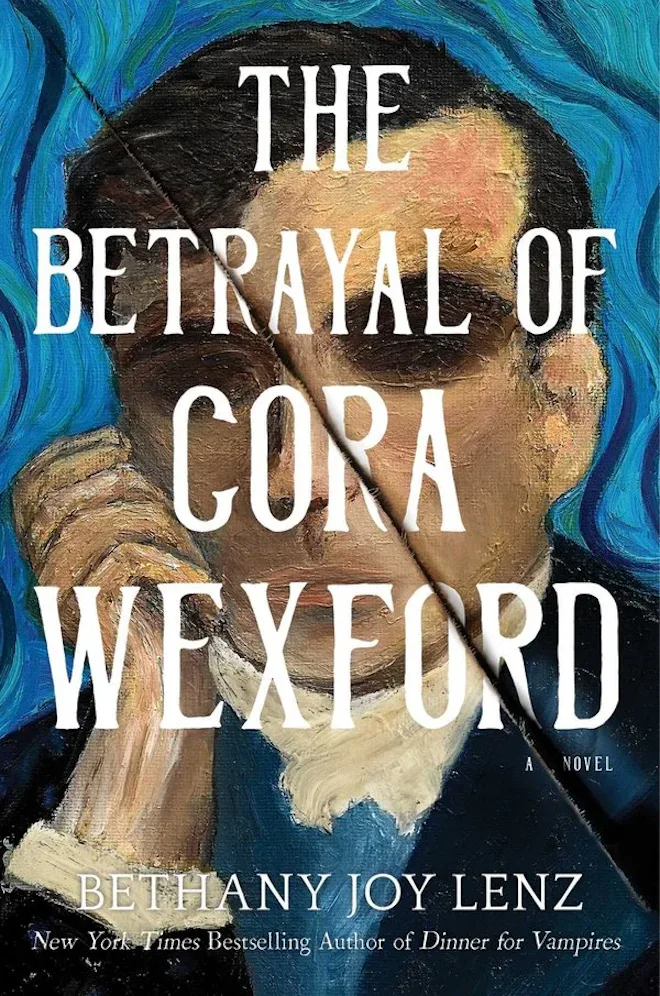
How was the process of painting your own book cover?
I loved art in high school and was really good at sketching, but I could never quite figure out paint. And then I moved to Manhattan, and where do you set up an easel in a little matchbox apartment? And then two or three years after I left the high-demand group, I just decided, why not? Who cares if I’m any good at it? Nobody’s looking.
We’re so used to commodifying everything we do. We have to hustle and sell. And I kind of was like, “Actually, no, I need something that’s just for me.” So I was an abstract painter for years and would’ve been embarrassed for real artists to see my work.
Then my editor was like, “You paint, right? Why don’t you just paint the cover?” I’m like, “I don’t paint people. I don’t know how to make stuff look real.” But I gave it a shot, and I’m just so grateful that for whatever reason, God gave me all these gifts of creativity.
This interview has been edited and condensed for clarity.
