Parasocial Activity
You’re Reality-TV Famous. Next Stop? Going On Tour.
From drag brunches to DJ sets to live podcast tapings, reality stars are cashing in on fan connection by getting off your screens and out in your city.
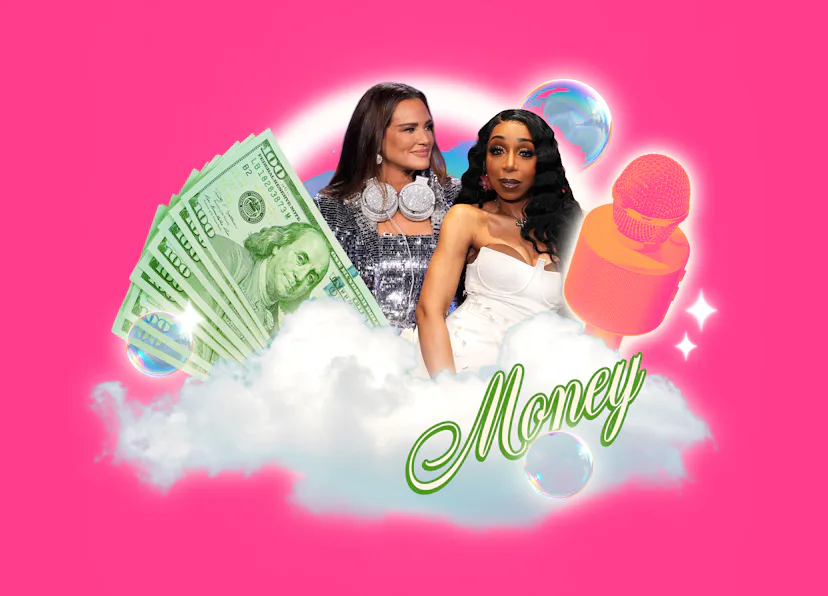
A few years ago, Cory Andersen was at a DirecTV Super Bowl party featuring a number of Real Housewives and RuPaul’s Drag Race stars when a lightbulb went off: These shows have the same audience. Could you get people to show up for Bravo stars like they do drag queens? “There was a lot of opportunity that these stars weren’t capitalizing on,” says Andersen, a talent manager who had primarily been working in the music industry with up-and-coming pop acts. “In certain cases, you get so much closer to a reality star than a musician. You know some of their deepest secrets. You get to know their family and their son’s coming-out journey or their daughter’s issues trying to have a baby. These are stories that are actually really changing people’s lives.”
He’s since transitioned his company, PRYSM Talent, to working almost exclusively with reality stars — from Drag Race queens to Bravo-lebs to the icon herself, Tiffany “New York” Pollard — and in particular helps them monetize the connections they’ve forged with viewers through IRL events. Since the dawn of the TMZ era, reality stars have been able to earn sweet checks for club appearances, but today, the menu for live shows is rapidly expanding — and fans are craving more than just a photo opp. Andersen’s creative programming has included watch parties, drag brunches, and even DJ tours; one of the first events he organized in this vein was a multi-city drag brunch tour hosted by The Real Housewives of Potomac’s Ashley Darby (in conjunction with Flip Phone Events). “When Cory proposed doing the drag tour, I think I actually leapt — I did a little woo in the air because it’s combining two things that I love: drag queens and meeting fans,” Darby says.
Still, it’s quite rare for a reality star to be shoulder to shoulder with their fandom to the degree that a live tour offers, or to get feedback about their brand in real time. “It was interesting to hear how different people from different areas and different walks of life resonated with me,” Darby says. “Some moms would come out for drag brunch — they’re moms who never really get out, and we would bond over that. Or it was women who were newly divorced and were like, ‘This is my divorce party.’ There was always something that connected us. And I credit Cory because that was something that had never really been done before, and now a lot more people are doing fan-interactive shows like that.”
So how exactly does a reality star get in on the action? Below, Andersen shares his insights on what fans really expect IRL, the pitfalls of live podcast shows, and orchestrating viral moments.
What do fans want out of the live experience?
It’s different with each person. The people who buy the meet-and-greets want to share that cathartic experience: You helped me. With Tiffany Pollard, they always say, “You gave me the confidence to stand up for myself, and I’ve always wanted to tell you that in person.” The depth of her authenticity, her wit — it reminds millennials to find your inner voice. With Ashley, I always remember people coming up and saying, “Thank you for being so open about your postpartum journey. I realized that I wasn’t alone.”
With other casual fans of the show, they just want to go party with some of their friends, see people on TV they’ve grown up with in real life, have a mimosa with them, and play some games on stage with them. I think they just want to be able to share their fandom with a person that they’re a fan of. The most common questions [Bravo stars] get is: Who would you cast on Ultimate Girls Trip? Who are your top five favorite Housewives?
“I’ve never seen somebody go up to Dorinda and yell ‘Clip! Clip! Clip!’ and her be upset about that.”
Sounds like bringing your favorite Bravo star into your group chat about Bravo shows.
Very that. I mean, even having a personal relationship with some of these people now — I was just as involved in the group chat when “slam pig” entered the vernacular [on Real Housewives of Rhode Island via cast member Rosie Woods]. I was like, “I can’t believe that this is real life. This is unbelievable.”
With stars who have catchphrases or memes associated with them, is there an expectation of performance — that they will embody if not re-create their most colorful moments?
Oh, absolutely, but I think that’s what makes it fun. Teresa Giudice is still flipping tables — we just played Flip-the-Table Flip Cup with her [at an event] where she was playing flip cup, and then at the end she just flipped the table. To that end, I’ve never seen somebody go up to Dorinda and yell “Clip! Clip! Clip!” and her ever be upset about that. It’s more of a celebration of a funny moment. When you go see your favorite artist, you want to hear them sing their biggest songs. I feel like it’s similar in reality television.
How do events fit into their overall business? Is it a good money-maker or more of a branding exercise? I know in the music industry, at least in the digital era, there was a sense at one point that selling albums didn’t make much money — but that was the vehicle for touring and merch, which do make money.
Touring will lose money for a lot of artists. It’s why a lot of record labels have a budget for tour support [to help with costs]. But when you’re on the road, you’re able to create a parasocial relationship with the fans, which means after they see you live, they’re going to stream the music, which means the money’s going to come back into the record labels. When you’re touring [as a pop artist], you’re traveling with a bus, a tour manager, four band members, two dancers. There are so many people with their hands in the pot. With this, it’s usually just one person showing up off the plane, getting to a hotel, and then getting them over to the venue, and then we produce the rest of the show around them at a much lower cost. And that’s not to devalue the musicians at all. It’s just that the economics of touring with one individual differ so much.
“I don’t think anybody should go in thinking, ‘How can I make this a catchphrase that’ll sell on a T-shirt? How can I sell a tour based on this?’”
Tell me about Meredith Marks’ DJ tour. From watching her on TV, I don’t know if I would have guessed she’d have a side hustle in nightlife — but it also doesn’t not make sense.
It’s been so cool. She’s a woman over 50 in a male-dominated industry selling out venues — it’s unbelievable. It started in gay bars because, as she just said on Southern Hospitality, “Supporting LGBTQ, how can I say no?” When the idea came up, I was shocked because she immediately went into lessons and was in with [songwriter and DJ] Leland and so many other people learning her way around the CDJs. I’m just really proud of the work that she’s put in and the fan experience that she gives people. She’s giving out caviar bumps of Meredith Marks Caviar while “Bumpin’ that” by Charli XCX is playing in the background. She’s throwing out roses to people. It’s that kind of thing where now, when you go back and watch her on Real Housewives of Salt Lake City, you’re like, “Oh my gosh, I caught a rose from Meredith!” So it just furthers that parasocial relationship and helps formalize that bond.
For a lot of reality stars, an entry point into events is taking their podcast on the road. You even have something like Giggly Squad, which did two nights at Radio City Music Hall. But we’ve also seen some Housewives struggle to bring their on-screen presence to a live setting. How would you advise someone considering that move?
When you’re looking at a podcast taping as a live event, you have to ask: What experience are you giving to fans beyond two people sitting at a table discussing hot topics? If you want to charge an upper-tier ticket, why is it worth that ticket? What are the fans getting in return, and why are they going to come back? I want to know that there’s going to be a different special guest at every show. What’s the one can’t-miss moment that is going to make it worth paying $70 a ticket?
How much effort goes into those Instagrammable, TikTok-worthy moments in a show?
It's never what you think it’s going to be. Meredith plays a [Kim Petras] Slut Pop mashup with Celine Dion, and when everybody pulled their phone out to record and started laughing, we were like, “This is going on TikTok every time she does it.” The caviar bumps [she does in front of a screen] in the Brat font and color, but it says “Bump” — we thought that was the moment where we’re going viral. I think it’s important to the show to try and create that moment. But oftentimes it’s the moment you don’t plan for that ends up going the most viral.
What are the challenges in this space?
Educating an older demographic of venue bookers about how passionate these fans are of their favorite reality TV shows. Tiffany Pollard is a TV legend of 20 years. She’s the architect, she’s the pioneer, she’s the mother of reality television. When I talk with these bars, people go, “I don’t know who she is.” I always go, “Go ask your wife and go ask your bartenders who this person is. All of your bartenders would pay to go see her!” Millennials have 20 years of growing up with this iconic star and are looking for ways to support her and see her. Just because you don’t watch these shows does not mean that fans in your city are not watching it.
“The people who buy the meet-and-greets want to share that cathartic experience: You helped me.”
What’s the next frontier?
There’s two things I would love to explore. One is collaborating with the IP behind all these dating shows. Turning that into a live show where it’s kind of a matchmaking scene in particular cities is interesting. And being able to translate a competition, a physical competition show, into a live theater audience is something I hope to bring by the end of 2026.
Are live events right for every reality star? Should everybody be coming out of, say, Love Island, with a strategy for this?
Not necessarily. It’s important to let the fans dictate what they want to see and what they want to support you in. I don’t think anybody should go in thinking, “How can I make this a catchphrase that’ll sell on a T-shirt? How can I sell a tour based on this?” They just need to be authentically themselves. And then, after that experience, take a look back and say: “Oh — this is something I love to do. Is this something that can translate to a live experience in a theater?”
Speaking of merch — you’ve worked on some unexpected merch projects with Drag Race alumni. After her “Taco Tuesday” bit on RuPaul’s Drag Race All Stars, Jessica Wild released her own branded tortilla chips. Kori King has coffee and tumblers.
My philosophy is: What can you do beyond T-shirts? Walking around DragCon, everybody there has a T-shirt. Like 200 booths all are offering T-shirts. What do you have outside of that that a fan needs to have on their bookcase, on their mantle, that separates you? I remember I had about a thousand boxes of chips sitting in my living room, and we sold out within three weeks because it was something different than just putting a line about guacamole on a T-shirt.
Any final wisdom or career advice for reality stars?
Don’t let delusion or your creativity prohibit a good idea.
