Quick Question
At F1 Academy, Susie Wolff Is In The Driver's Seat
Behind the scenes, this exec is creating a surge of interest in women’s racing.
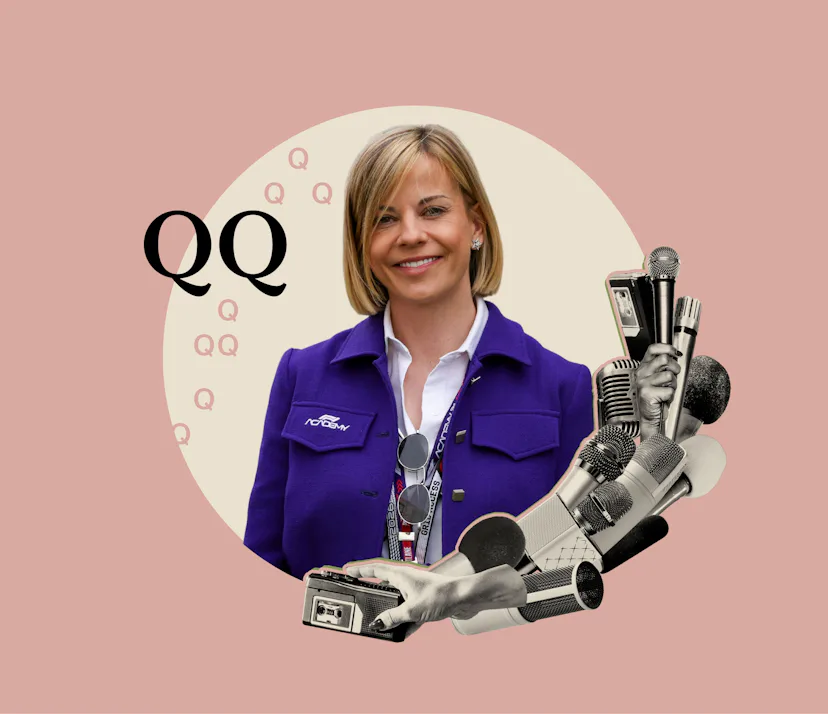
Motorsports run in Susie Wolff’s family. Her parents, Sally and John Stoddart, owned a motorcycle dealership in their hometown of Oban, Scotland, and met when Dad sold Mom her first bike. Wolff started competing in karting competitions at age 8, alongside her brother, David, and went on to race for some of the most illustrious names in the circuit: Mercedes, Williams, and more. Then, in 2014, she became only the second female driver – and the first in 22 years – to take part in a Formula 1 race weekend at the British Grand Prix.
Since retiring from professional racing 11 years ago, she has stayed close to the track, joining F1 Academy as Managing Director in 2023. The women-only championship was founded in 2022 to improve the professional pathway for women in formula racing. “Having the opportunity now to help female drivers and to create something which is having a positive impact in this sport,” she says. “It's something I really enjoy.”
Initially, she faced quite a challenge. “When I arrived at the very first [F1 Academy] race, it was empty,” says Wolff, 43. In fact, she had never been to such an empty track. “I immediately called Stefano [Domenicali, CEO of F1] and said, ‘We need to race with you.’”
Over the past four years, however, she’s helped spark a growing interest in women’s racing. Last month, fans lined up in at the Grand Prix du Canada to snag passes for the F1 Academy Race, staged as a double header with the men’s Grand Prix title races. That afternoon, emerging talents Alisha Palmowski, Megan Bruce, and Emma Felbermay raced in front of the same full grandstands as Lewis Hamilton, Charles LeClerc, and George Russell.

Last month, F1 announced that its ongoing Fuel The Magic partnership with Disney would expand to include F1 Academy, with both a new clothing line themed around Minnie Mouse and Daisy Duck, and The Minnie Collective. The platform is rooted in community and storytelling, giving girls and young women the opportunity to connect with one another and foster ambition, confidence, and creativity.
“When we discussed characters and what it could all look like, it was very clear that we wanted it to be Minnie and Daisy, this idea of female friendship. It's allowing us to show little girls it's not [about being either] feminine or fierce; you can be both,” Wolff says.
“When I go to car tracks, I get little girls coming up to me saying, ‘One day I'm going to drive for you in F1 Academy.’” Wolff says. “They now have a clear goal, they have a clear vision of where they want to get to.”

Below, Wolff discusses the challenges of working in a male-dominated field and offers career advice.
How would you describe your job to someone who doesn't know you?
No two days are the same. A lot of the job is around the commercial and legal aspects of the series, and dealing with the teams. A big part of it is race weekends, obviously, which is more about making sure that the spectacle of the race is right, making sure from the sporting perspective that we have everything in order. And then some of it is spent at car team tracks, looking at the next generation, seeing which female drivers are out there, and who could make it to F1 Academy in the future.
What do your mornings look like?
Oh, I'm a morning person. I get up with my son. I get him off to school. I go straight to the gym and get my training done because if I don't get it done first thing, it tends to not happen. I get a lot of work done in the mornings. I'm someone that gets up, gets everything done, and there's a lot of enthusiasm for me to get going in the morning. Mornings are my best time.

Do you ever get stressed before big meetings?
I guess because I was a driver for so long, I embrace pressure. It brings out superpowers. If you’re nervous, that means it counts for something, so be happy that you're in a situation where something counts. As long as I'm well prepared, I try not to let the nerves overcome me. I don't try and bring anything special out of the box for a big meeting. It's just: be myself, speak when I’ve got something to say, and listen if there's nothing to contribute.
How do you navigate conflict at work?
I don't shy away from it. There will always be moments where there's disagreements, and I like to tackle it head on. Let's sit down, let's talk about it, even if it's awkward, even if it gets heated. Let's have that difficult conversation.
What is your best advice for anyone starting a career in a male-dominated field?
Don't worry about the noise around your gender. Walk into any room with the best version of yourself. If you just focus on being really good at what you do, your gender becomes irrelevant, because you are someone that brings performance — and performance is power.
This interview has been edited and condensed for clarity.
