Life
10 Years Later, One Family Reflects On The Support That Changed Everything
Ronald McDonald House gave the McBride family a place to stay when their newborn was in the NICU.
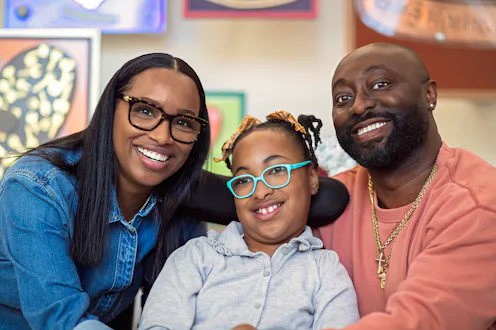
Even if you don’t have a family member who needs around-the-clock medical care, you can probably imagine what it entails: endless hours in a hospital, dinners cobbled together from a vending machine, and a complete upending of “normal” life. That’s where Ronald McDonald House steps in, offering a place to stay, nutritious meals, and a sense of community for families with children receiving medical treatment.
For the McBride family, their experience with Ronald McDonald House began 10 years ago — just as they were about to become parents. Jevon and Jules McBride were in a serious car accident when Jules was 25 weeks pregnant, leading her to have an emergency C-section and give birth to Juliana, who weighed just 1 pound and 10 ounces. Juliana was later diagnosed with a Grade 4 brain bleed and hydrocephalus. "While I was recovering in a wheelchair, Jevon was enduring multiple surgeries — and Juliana was fighting for her life in the NICU," says Jules.
A Place To Stay Together
A hospital social worker told the McBrides about Ronald McDonald House when it became clear that Juliana's hospital stay would continue long after Jevon and Jules were discharged. They lived an hour and a half from the hospital and were still recovering from the accident; Jevon was also undergoing weeks of physical therapy.
To stay close to Juliana, Jevon and Jules stayed just steps away at a Ronald McDonald House in Kansas City for 105 days. A decade later, their time there has stuck with them. “I vividly remember the nights when Juliana was fast asleep, and we could return to Ronald McDonald House,” says Jules. “There would be a meal waiting that had usually been prepared by volunteers, and we would be able to sit down with other families after long days at the hospital.”
There, they didn’t just get meals and a bed; they got a sense of community. “There was an unspoken understanding in the way we looked at one another — sympathy, encouragement, and the knowledge that no one had to explain what the day had been like,” says Jules. Besides the other parents, everyone at Ronald McDonald House contributed to that sense of kinship. “From the other families to the staff to the volunteers, we couldn’t have done it without them, and we still cherish and maintain many of those connections to this day,” Jevon adds.
Finding Community
This sentiment from Jevon is in line with the many families who describe Ronald McDonald House as a second home. The House “becomes part of their family’s story — a place where they find hope, community, and the strength to keep moving forward together,” says Katie Fitzgerald, President and CEO of Ronald McDonald House Global.
The McBrides also found support in smaller, more surprising ways. For instance, while staying at Ronald McDonald House, Jevon would play the piano after returning from long days at the hospital, which served as an emotional outlet. "During such an overwhelming time, playing melodies gave me a way to stay grounded and feel like myself," he says. "They were small moments, but moments like those helped me recharge so I could keep going for my family."
That time, space, and opportunity to rest and recharge can make a difference for the children receiving medical care, too. “In Juliana’s earliest days, having a place near the hospital, nutritious meals and a community of care helped Jules and Jevon stay close and be present in her care,” says Fitzgerald. “For some families, Ronald McDonald House was the difference between their child being able to receive treatment at all.”

Your Support Matters
The McBrides are among the millions of families who've received support from Ronald McDonald House over the years; in 2025 alone, the House and Family Room programs served roughly 629,000 families. Still, demand exceeds available space: some programs must place families on waitlists or turn them away when they’re full. "That’s why we set a goal to double the number of families we serve through our programs by 2030," says Fitzgerald. You can support the organization in a few ways, like offering a skill (such as teaching families how to knit) or volunteering your time (for instance, cooking meals).
Since those first few months of Juliana's life, the family has returned to Ronald McDonald House over the years for brain surgeries, as well as other medical care related to cerebral palsy, hip dysplasia, and other conditions. "Each time, the House welcomed us with open arms," says Jevon. "It became a consistent safe space and a familiar home during difficult periods of medical care."
The House has allowed Jules and Jevon to play an active role in their daughter's care, which is especially important for kids navigating medical issues — which rarely follow a straight line, as Fitzgerald puts it. Whether families return for surgeries, follow-up appointments, or new therapies, “each visit can mean rearranging work and family life, finding somewhere to stay and managing the cost of being away from home — all while trying to focus on their child,” she says. With Ronald McDonald House, they get a sense of stability and comfort no matter what comes their way.
This fall, Juliana turned 10, and the McBrides celebrated with friends and family over dinner and a birthday party at home — a seemingly ordinary celebration for a moment that was hard-fought. In fact, this was the first birthday that Juliana had ever blown out her birthday candles on her own, something that, due to her cerebral palsy, took considerable breath control and core strength. Her family was understandably overjoyed at seeing the feat. “Sometimes we see our family together, and it hits us how far we’ve come,” Jevon says. “The everyday moments we once wished for are now the moments we treasure the most.”
Knowing firsthand how vital this support was, the McBrides are asking for donations of $10 or more to help increase capacity and ensure more families can stay together as they navigate tough challenges.
