Hello?
Crickets In The Family Group Chat? You Might Be Dealing With “Sibling Drift”
Here, two therapists offer advice for addressing it.
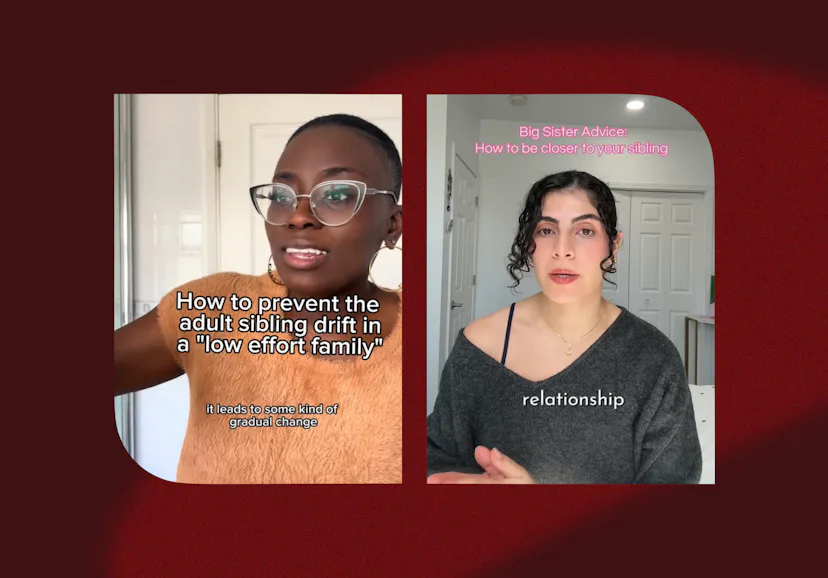
Does texting your younger brother feel like pulling teeth? All you want is to send a few silly messages and catch up, but he shows zero interest in the chat. The same is true for your older sister, who notoriously bails on plans and only sporadically answers your FaceTime calls. It’s easy to go days or weeks without talking, and suddenly you don’t have a single clue what’s happening in her life.
This is called “sibling drift” and it can really put a damper on your connection. It happens slowly — a few ignored texts here, a canceled brunch there — but it can easily slide into bigger instances, like forgotten birthdays and skipped holidays. Sometimes, sibling drift can even turn into a full-on distance until you lose touch completely.
Sibling drift is different from going no contact after a problem and it’s rarely done intentionally. As @dr.sherrie, a licensed therapist, says on TikTok, it’s more about feeling like you’re in a one-sided relationship with someone who has more important things going on. You can tell that your sibling isn’t super curious about your life, and you often have to be the first one to check in. It can be exhausting and hurtful.
Therapist and creator @dorcas.asumingopoku says it’s something that happens in “low effort families” where everyone kind of gives up on closeness as a whole, especially as they get older. Here’s what to know about the drift — and how to prevent it.
The Great Sibling Drift

According to somatic therapist Chloë Bean, LMFT, sibling drift is the gradual emotional distancing that can happen between sisters and brothers over time. There isn’t one big moment that pushes you apart and it’s not that you dislike each other, it’s just that the relationship becomes a little quieter than usual.
“Texts become less frequent, calls get postponed, plans never quite happen, and months can pass before you realize how disconnected you feel from them,” she tells Bustle. “Sometimes the relationship still looks ‘fine’ on the surface, but it no longer feels as close or intentional.”
Big life transitions are often to blame. “Marriage, parenting, moving, career changes, dating, caregiving responsibilities, or simply being in different life stages can all create distance,” Bean says. “When that season changes, the relationship gets redefined. Old family roles begin to shift, and it can feel uncomfortable.”
As licensed psychotherapist Lisa Chen, LMFT says, sibling drift can bring up feelings of grief, rejection, guilt, and confusion. It can also be embarrassing: You might wonder why your older brother doesn’t care that you got a new job or why your younger sister is constantly active on Instagram but still can’t text you back. “One day, you realize the person you've spent so much time in your earlier life now feels like a distant relative,” she says.
Why It Sucks

Everyone knows it’s possible to outgrow friends or break up with a partner, but not enough people talk about the shock of drifting apart from a sibling. “We tend to assume family relationships should stay intact automatically,” Bean says. They say blood is thicker than water, after all.
Sibling relationships also offer shared history, family memories, and a source of identity. When a sibling doesn’t seem to value that as much as you do, it takes a hit on your self-esteem, and it might even make you question who you are as a person. “It's helpful to remember the drift says more about life stress, capacity, or unresolved family patterns than your worth,” Bean says.
How To Stay Close

If you love your siblings and want to stay connected, Bean recommends reaching out with specific plans. Instead of saying “Hi, we need to catch up!” try “Are you free on Thursday at 7 for a quick call?” It’s much easier to ignore a vague plan than one with a solid start and end time.
It’ll also help to normalize busy seasons. If your sister just got promoted, then it makes sense if she’s a little distracted and distant than usual. Send short “thinking of you” texts to keep your connection alive, but give her the space she needs to focus on work. You can’t force her to respond, but you can nurture your connection.
“I miss you and would love to stay more connected.”
Bean also recommends creating low-pressure rituals, like a monthly coffee, yearly birthday dinner, or a sibling group chat where you share memes. You don’t have to talk about life, parents, money, or houses, if that feels like a lot. Just send dumb jokes, which is so sibling-coded anyway.
According to Chen, it helps to stop scorekeeping, too. You might be hurting your own feelings if you constantly think, “I was the one who texted last, so it’s their turn now.” Try not to keep a running tally in your head, and just let things unfold naturally. If the problem persists, that’s when you might want to call it out. Bean suggests a quick text that says, “I miss you and would love to stay more connected.”
That said, you should look out for yourself first and foremost. “There may come a point where stepping back is healthier than chasing them,” Bean says. “That doesn’t always mean the door is closed forever, but it may mean grieving the relationship as it once was and accepting what it is right now.”
Sources:
Chloë Bean, LMFT, somatic therapist
Lisa Chen, LMFT, licensed psychotherapist
