Wellness
This Weird Trick Will Help You Cope With Anger
“Doing this sent electricity through my body.”
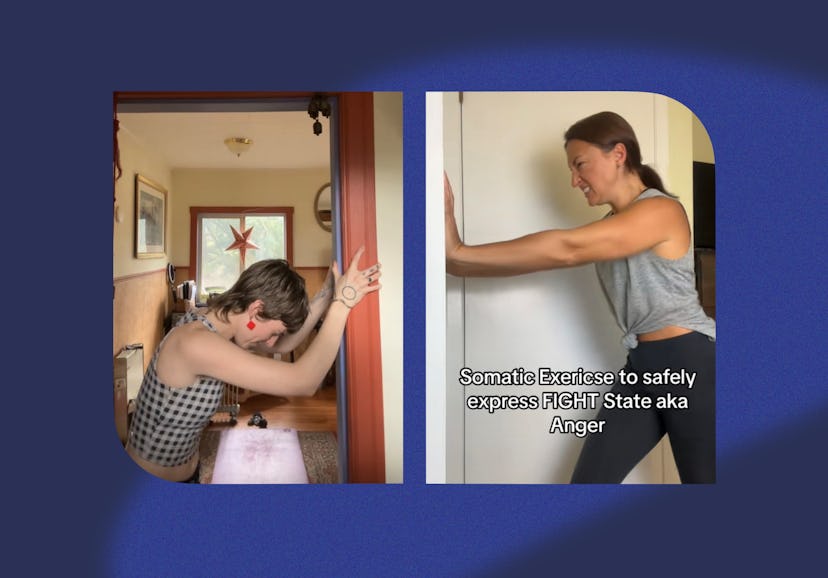
When you’re angry, it’s tough to know what to do with all that energy. Do you scream into a pillow? Throw something? Run around? According to TikTok, you should push your hands against a wall as hard as you possibly can.
It sounds random, but it’s apparently one of the best ways to rid your body of rage. On the app, creator @christine.coen said this hack is a way out of the fight-or-flight state that can set in when you’re mad, upset, or super stressed. All you do is place both hands firmly on a wall and push, kind of like you’re trying to move it back 10 feet.
As you press your hands into the bricks, she recommended tensing all of your muscles. If you want, you can even grunt or yell. “It’s a harmless way of naturally releasing repressed anger and lowering the stress response in your body,” she said in the viral clip. “Notice how you feel before and after.”
In her comments, someone said, “Doing this sent electricity through my body, felt so good to release the frustration!” Another wrote, “I struggle so badly to express and feel anger. I shift it to self-hatred and internalize it almost immediately. This might help me express it.” Here, a therapist breaks down why it works.
Try Wall Pushes For Anger

According to Erica Schwartzberg, LMSW, a psychotherapist at Downtown Somatic Therapy, anger is one of the most suppressed emotions. “We're taught anger is bad, destructive, or unacceptable, so we push it down, which only makes it more volatile,” she tells Bustle.
Anger is also uncomfortable. “It floods your body with adrenaline and cortisol, which can feel overwhelming and out of control,” she says. And if you don’t let it out, it gets stored in your body, leading to a whole host of symptoms.
“Chronic suppressed anger contributes to tension headaches, jaw clenching (TMJ), digestive issues, high blood pressure, and chronic pain,” she says. “Psychologically, it can manifest as irritability, passive aggression, depression, or burnout.”

While there are many ways to release rage — think running, singing loudly, crying into a pillow — pushing hard against a wall will mobilize the angry energy that desperately needs somewhere to go.
“When you're angry, your body is flooded into fight-or-flight, preparing you to push back against a threat,” Schwartzberg says. “Pushing against a wall gives that energy a physical outlet, doing what the nervous system is trying to do: exert force, create resistance, push back.”
It’s a kind of somatic, body-based practice, says Dr. Lindsay O’Shea, PhD, a clinical psychologist. “Instead of trying to think our way out of anger, this practice works from the body up by engaging muscles and physical pressure to help regulate the nervous system,” she says. “The wall push gives the body a safe, contained way to complete a stress response, which helps the nervous system settle.”
This hack would be helpful for anyone who internalizes anger: Don’t stuff it down, push it out. It would feel great after an argument, a frustrating experience, a stressful meeting, a really bad day — or anything that stirs up irritation or fury.
Trying A Wall Push

To try a wall push, find a sturdy wall, like one made of brick or cement. If you only have drywall, look for a solid doorframe or kitchen counter.
Once you find your surface, O’Shea recommends placing your hands flat against the wall at about shoulder height with your fingers spread and your wrists neutral. Stand with your feet hip-width apart, knees slightly bent, and your core engaged. Step one foot forward if you need to for balance.
As you push, exhale. “Avoid holding your breath,” O’Shea says. “A low exhale, sigh, or soft grunt can help release tension. Yelling isn’t necessary and can sometimes increase arousal rather than reduce it, so keep any sound grounded and controlled.” That said, it might feel right to blast your angriest playlist.
Push for about 10 seconds, and pay attention to how your body reacts. “Perhaps you'll feel a spontaneous sigh, notice yourself breathing deeper, a drop in agitation or urgency, or feeling more present and clear-headed,” she says. “People have reported feeling less tension in their body after wall pushing and more emotionally settled.”
If you feel shaky, dizzy, or more upset, stop and reground yourself. “It could be possible to overdo it if you push too hard or too long and don't let your body rest,” O’Shea says. See what comes up, whether you need to cry, go for a walk, take a nap, or move on with your day. For most, this will feel like you’re finally doing something positive about your anger.
Sources:
Dr. Lindsay O’Shea, PhD, clinical psychologist
Erica Schwartzberg, LMSW, psychotherapist at Downtown Somatic Therapy
