Life can really feel like a blur. It starts the moment you wake up and race into the kitchen to make coffee. Instead of enjoying a slow morning routine, you splash milk into a mug, dash out the door with one arm in your coat, and drop your keys along the way.
The rest of the day feels just as hectic. At work, you blast off email after email. At lunch, you practically inhale your food in a race to finish. In the evening, you find yourself putting away dishes at breakneck speed. Even a “relaxing” walk with your dog sees you practically jogging down the street. This is what it feels like to be stuck in “urgency mode.”
Urgency mode is when you rush through the day, charge through tasks, and try to do too many things at once. It’s that feeling of “go go go” that makes it seem like you’re living life on autopilot, and according to therapists, it can be tough to break out of.
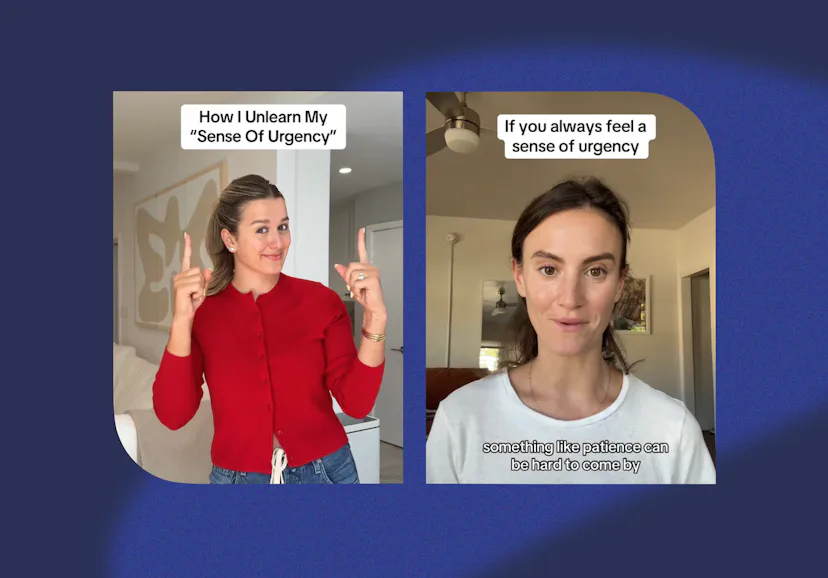
On TikTok, people are realizing they’re stuck in this mode, and many have been that way for years. It often includes habits that feel normalized. Think about how you react when you get a text. Do you grab your phone and respond immediately? Now think about your chores. Do you fly through them quickly like you’re trying to win a race? If so, you might be in urgency mode, too.
What To Know About “Urgency Mode”

According to psychotherapist Erica Schwartzberg, LMSW, urgency mode is the state of operating as though everything is an emergency, even when it isn’t. It’s that internal hum that tells you to move faster, do more, and always be busy. There are so many things that can put you into urgency mode, but the result is always the same: You forget how to slow down, and it really takes a toll your nervous system.
It happens when your body and mind have learned that rest is “dangerous” and productivity is safe and good, Schwartzberg says, whether it’s something you picked up at work, through family, or simply from societal expectations. “It often develops so gradually, and gets so thoroughly reinforced by our culture,” she tells Bustle. “In a way, it becomes intertwined with your personality, making it hard to recognize.”
Think about what you were taught at a young age. Maybe your parents said it wasn’t OK to relax on the weekend or you had a teacher or boss who rewarded poor work-life balance. It’s a common belief that “to be productive is to be good, and to rest is to be lazy,” she says. “The messaging is relentless: optimize your morning, hustle harder, do more with less, be everything to everyone.”

While it’s OK to work hard, reach goals, and push toward your dreams, it’s easy to get stuck in this state of mind — even in your downtime. The pressure to hustle might linger long after you close your laptop for the day, and it could explain why you constantly feel stressed, on edge, checked out, or tired.
“When we live in urgency mode chronically, the nervous system gets calibrated to high activation as its baseline,” Schwartzberg says. “The sympathetic nervous system — responsible for fight, flight, freeze, fawn — essentially gets stuck in the ‘on’ position. Over time, the body stops registering this as stress because it becomes the norm.” Eventually, you burn out.
Urgency mode can also stem from a lack of presence, anxiety, work pressures, and perfectionism. It elevates your cortisol levels, affects your sleep and immunity, and wears you down mentally. “Urgency mode can turn even pleasurable experiences into items on a to-do list,” she adds, which is why you struggle to enjoy brunch with friends, a night in, or even a vacation.
You Might Be In Urgency Mode If...

Think about how you act as you go about your day. If you walk fast, talk fast, and complete tasks at warp speed, it could be a sign that your body is in overdrive.
According to Schwartzberg, it might also feel like it’s physically impossible to slow down, even when you want to. On a quiet Sunday morning, you might catch yourself vacuuming like you’re under time pressure or speeding to the coffee shop even though you have nowhere else to be.
It can also make you feel vaguely guilty anytime you rest. A moment of relaxation might seem like it’s something you have to earn, she says, like “I’ll sit on the couch, but only after I respond to five emails.” You might also say things like, “I’m wasting the day.”
“The felt experience is even subtler and worth paying attention to: a low-grade anxiety that never fully lifts, a sense that you're always slightly behind, difficulty feeling satisfied even after completing things, and a complicated relationship with rest,” she says.
How To Get TF Out

To escape urgency mode, you have to catch yourself in the act. In @victoriagarrickbrowne’s TikTok, she showed herself hunched over her laptop typing a mile of minute. To relieve urgency in that moment, you would pause, relax your shoulders, and intentionally type slower.
Keep an eye out for speed, tension, and moments where you feel chaotic or stressed. If you notice that you’re racing out the door, pause to mindfully button your coat and put your bag on your shoulder. If you’re trying to do too many things at once, choose one task or make multiple trips.
Going slow is also key. Think sipping your coffee instead of gulping or putting dishes away slowly instead of slamming them onto a shelf. In @victoriagarrickbrowne’s comments, someone wrote, “I once watched my friend sweep her kitchen floor and she did it so calmly. I had only ever swept up in a rush. I channel her when I feel myself rushing through sweeping and vacuuming. Totally different vibe.”
When you’re used to being in urgency mode, going slow will likely feel weird at first, and maybe even boring. But Schwartzberg says it’s essential if you want to reorient your nervous system and adjust your approach to life. “When you deliberately slow your physical movements, you are sending a bottom-up signal to your nervous system that there is no emergency. You are actually creating the physiological conditions for calm.”
Source:
Erica Schwartzberg, LMSW, psychotherapist at Downtown Somatic Therapy
